The cost-benefit “disconnect”.

budget for marketingThis is a short post designed to stimulate thought around the subject of cost/benefit ratio of dental marketing. I’m prompted to write this because one of the biggest hurdles we encounter when trying to persuade dentists of the value of digital marketing for their practice, is the apparent disconnect between what it costs and what it delivers.

First let’s take a quick look at the time taken to deliver the monthly marketing work i.e. seeking out website link opportunities, blogging, social media content generation etc. For our campaigns, this is typically anywhere between 6 – 20 hours per month depending on the scope of the project. So basically how much input is required to meet the client’s objectives and to overhaul the competition in their local area. Prices range from £250 through to £1000 + per month which, taken in isolation, seem like big numbers.

It’s often at this stage that dentists or their practice managers panic and decide not to progress, albeit they are paying out much more than this on other monthly services which just fall as part of the expected costs of running a practice. If you add up the costs of practice management software, waste disposal, mechanical servicing for autoclaves, compressors, surgery chairs and all those other essential items, then you get to a pretty big number.

Marketing – isn’t that another essential service too?

Whilst all those items might be more tangible than “marketing” and clearly essential for the safe and effective running of a practice; without holding on to existing patients and attracting new ones, it all becomes a bit pointless and worse, business threatening. In this vein and as a cautionary tale, after 17 years of working with hundreds of dentists, we currently have our first client who cannot pay us for the work we completed. He designed and built a very smart surgery in a purpose-built facility but, despite our advice to budget for marketing, failed to put any systems in place to attract new patients. 12 months down the track and it looks like he could be out of business soon. A rather desperate and sad situation.

Cost/Benefit

(more…)

Why a high-quality blog is an important component of your digital marketing….

WordPressWe’ve recently had two or three monthly marketing clients question the relevance of dental blogging and either elected to try to do it themselves (and subsequently failed) or stopped completely.

Ditching your blog is actually quite short-sighted; so in this blog we’ll take a closer look and discuss why blogging is a key component of any digital marketing strategy and how neglecting it is not a wise choice.

Before we delve in, lets look at a couple of reasons practice principles and managers quote when questioning the value of blogging:

  • “no one reads them”
  • “it costs too much”
  • “it’s not sufficiently oriented to the practice”

At face value these may look like reasonable concerns but the underlying reasons for blogging and the many advantages and “value add” it brings, far outweigh the concerns about cost and relevance. So let’s try to address these concerns individually in order to demonstrate why blogging is an important cornerstone of any digital marketing campaign.

Who reads your dental practice blog?

(more…)

Rule-of-thumb performance figures for dental pay-per-click campaigns.

AdWords costPay-per-click (PPC) advertising is becoming increasingly important for dentists who wish to publicise their services via Google search pages and other associated networks.

As I’ve covered in more detail elsewhere in this blog, the main reasons for embarking on PPC are where a website is new and has no useful organic (free) rankings, or where the advertiser already has decent organic traffic but also wants a slice of the traffic which goes to websites via the paid route.

The split of traffic, paid to organic, varies by industry but as a rule-of-thumb, consider that it’s around 30/70 in favour of the free results. It’s also quite easy to demonstrate that conversions i.e. actual enquiries from clicks on the free listings, are typically better than clicks on the paid listings. So we have a couple of factors which support our general recommendation that dentists should seek good organic ranking positions in the medium to long term.

That said, Google PPC (AdWords) can deliver new enquiries if you do it diligently and have sufficient budget to make it worthwhile.

It’s the last part of the statement above, i.e. “sufficient budget”, which I’ll try to cover in a little more detail in this blog article; particularly because it’s a question we are frequently asked by dentists who are considering starting their own paid advertising campaigns in Google.

Budget – how much is enough?

This is a very broad question and no one answer will be correct. By design, AdWords is a competitive process, with higher bids earning more prominent advert placements; so chasing clicks for treatments such as dental implants or short-term orthodontics in inner city locations means higher click-costs and consequently bigger budgets. There is no escaping these basic fundamentals.

We currently manage click budgets ranging from around £250 per month for single surgeries with niche campaigns, right through to £15k per month for very broad campaigns. More typically, practices are spending anything from £400 -> to £2500 on their monthly click budgets and we are seeing an increasing trend as competition continues to drive click budgets northwards.

Typical AdWords metrics for dental campaigns

(more…)

Understanding Analytics.

web analyticsIt should go without saying that whichever type of marketing you do, it’s absolutely essential to measure the results.
However, it never ceases to surprise me that many dentists undertake marketing exercises without really understanding the benefits, or worse, what they are actually wasting. Without such knowledge, it’s impossible to determine what works, what doesn’t and consequently how to adjust to ensure best returns.

Perhaps the easiest way to get a clear picture of your web marketing results is by using the free and excellent tool provided by Google called Analytics. This can easily be set up on your website to provide all sorts of information about site visits, but also integrates very nicely with other systems such as AdWords (pay-per-click), social media channels and telephone call analytics. It’s an extremely versatile system and the main tool of choice for anyone managing digital marketing campaigns.

Goal setting

I’m not going into the mechanics of setting up Analytics in this particular blog post – it’s easy enough for your website developer to do. Instead,  I wanted to draw attention to one aspect which is often neglected (perhaps deliberately?) by marketing agencies who work on behalf of clients to set up and “manage” their digital campaigns i.e. setting up of “goals” or “conversions”. As their descriptions suggest, these are key activities you want your website visitors to undertake after they’ve landed on your website, for example completing a contact form, booking an appointment, submitting their email address to download your e-book and many more. You can “flag” and monitor any particular activity which is of importance when it comes to understanding your marketing campaigns.

Why is goal setting often neglected by dental marketing companies?

(more…)

Bespoke websites taken to new levels.

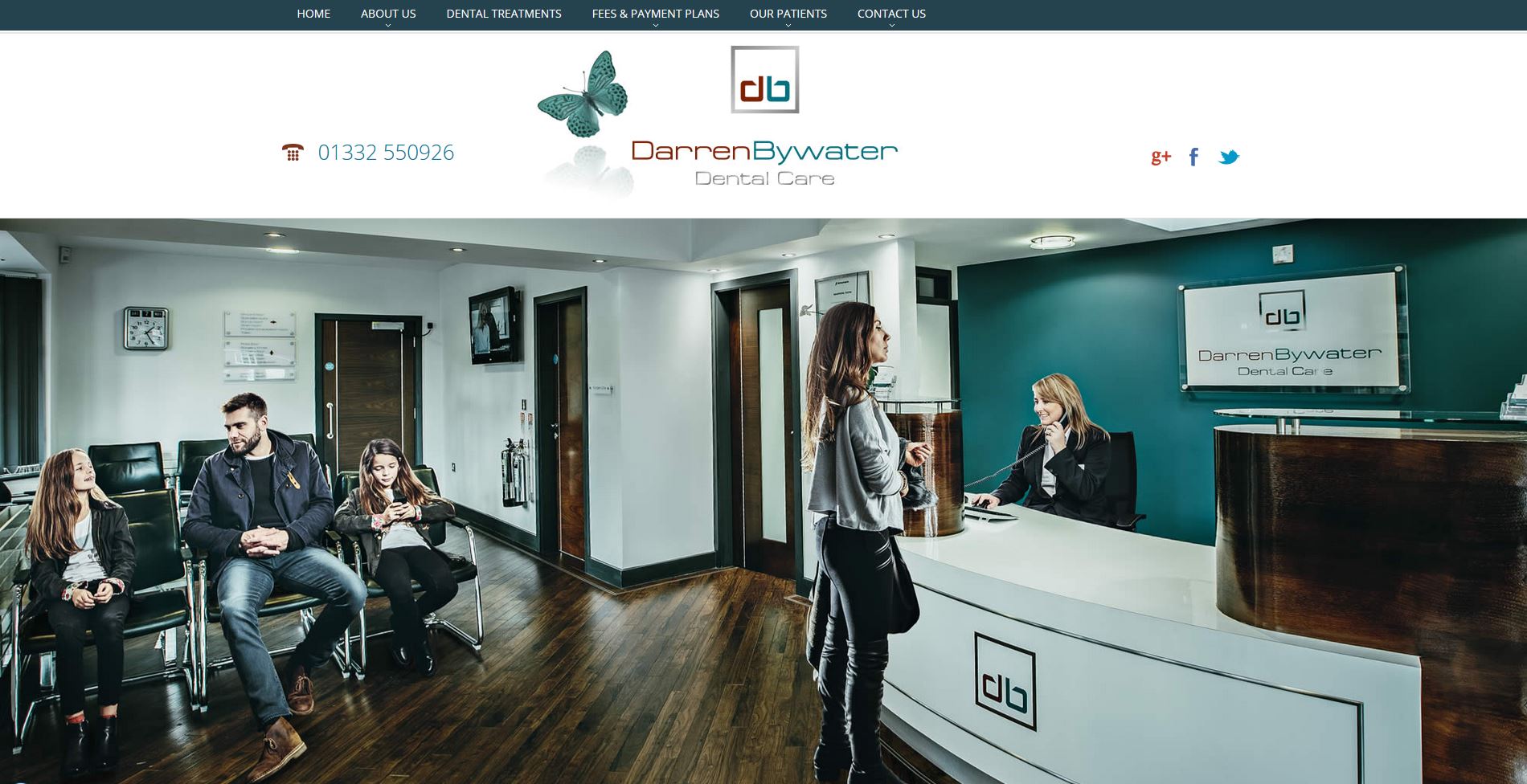
The team at Dental Media recently completed a new website project for Dr Darren Bywater, a prominent dentist in the East Midlands region. In fact the overall project incorporates three new websites, one to cover the general side of the business, a second to cover dental implants in depth and a third for the specialist referral side of the business. Two websites are already live and the third will follow in the coming weeks.

All of the new websites are “high-end” but perhaps the main factor which really helps to differentiate from the dental competition is the high-quality photography and video which is incorporated; all planned and managed by the Dental Media in-house project team.

The website

The websites are designed to showcase the services of Dr Bywater and his team, particularly the exceptional quality of the facilities and services offered at his recently renovated practice in Allestree near Derby. It was important to capture how the 5 surgery facility and dedicated implant suite sets the practice apart from others in the area, together with the high-standard of services patients can rely on. So as well as detailing the wide range of treatments offered, the site also delivers user-friendly information covering exactly what new and existing patients can expect when joining the practice.

high-end web design

(more…)

‘Mobilegeddon’ phase 2 on the horizon in May.

optimising website designIn a recent announcement Google advised that websites which are not mobile friendly will be open to ranking demotion in the mobile search index in an update scheduled for May.

Whilst they also said that sites which have great content and are very popular could still rank well, in reality this isn’t many business websites.

Chances are that if your site is old and not optimised, the dentist near you in the search results with the modern, mobile-friendly site, could well jump ahead.

Why is Google boosting mobile-friendly websites?

A core principle at Google is to make the web better for users and to deliver the most relevant websites in response to search queries. One of the fundamentals of providing a good user experience is to ensure that the information on your website is easy to navigate and read on all devices, from mobile ‘phone browsers and tablets through to traditional desk-top screens. Old style websites which present information in a fixed format are frustrating for users as they stretch and scroll through screens trying to read the content – so not a good user experience, and one which Google is very aware of.

For the reasons above, over the last year or so, Google has been encouraging website owners to ensure that their sites are upgraded to provide the best user experience. This means a mobile-friendly format, typically using a technique called responsive design. This technique automatically adjusts the format of the information depending on the size of screen – so mobile ‘phone users would see larger text and a different layout compared to viewers using a desk-top browser.

Google first intimated ranking demotions for non-optimised sites a while back, but it now seems they are reinforcing the message with the recent announcement about May’s algorithm change to favour mobile friendly websites.

What does this mean for the dental community?

(more…)

The practicalities of content management systems

clicking on mouseContent management systems (CMS) enable website owners to access their website pages to make changes without need to refer back to the original designers – well at least that’s the theory. In part, this is correct, but the facts shows that dentists who have CMS installed on their websites rarely use them other than for small changes, such as text edits in a dental fees table or to update the biography of a staff member.

When it comes to more extensive updates, for example adding new treatment cases or even new pages, then things start to go awry and invariably the original designer needs to be involved. So why is this? Using content management is easy right? Not exactly….

Content management for the inexperienced – what to expect?

Most PC users will be familiar with “Word”, “Publisher” or perhaps “Powerpoint” or “Keynote” (on Mac). These programs allow you to create content easily and quickly and feature-rich presentations and reports are generally a breeze. Their ease-of-use tends to make users believe that publishing on the web is equally as simple whereas in practice it’s not. Indeed, even the best website content management systems are way more restrictive than their desk-top counterparts and require skill, training and experience to use – particularly so if you are looking to complete anything other than very basic updates to your website.

Why is website CMS not necessarily user-friendly?

(more…)

DIY pay-per-click advertiser? Some minimum “must do’s” to clean-up your campaigns.

AdWords optimisation tasksFirst off, it should be re-iterated that trying to manage your own AdWords account without sufficient training and experience, usually leads to a lot of wasted cash.

Typically you will be paying over the odds for clicks, missing the mark with your targeting and simply boosting Google’s coffers with little to show for it. Consequently we always recommend working with an experienced AdWords practitioner if at all possible.

That said, some dental practices do configure and manage their own accounts, so for those that do, here are a few “must do” spring cleaning activities that are important to ensure that your accounts deliver some level of success.

Review your account structure

Far too many DIY PPC dentists set up their accounts much too broadly i.e. one campaign, one or two ad. groups and then lots of diverse keywords thrown in. This is not good good! Your campaigns, ad. groups, keywords, adverts and landing pages all need to be targeted to a narrow topic range to ensure tight control, relevance and to yield lower click costs. Without this, you could be spending 40% or more than you actually need to.

So it pays to review your targeting, set your campaigns, ad. groups, keywords and ads. in a granular and well-structured fashion. It takes time but it does pay off.

Check your keyword match parameters

(more…)

The risks of spreading resources too thinly.

budget for marketingPeriodically we are asked to review the overall cost of the marketing we carry out on behalf of dental practices; typically at budget time or perhaps when new associates have joined and appointment books need to be filled.

This usually takes the form of an enquiry to see if the level of marketing can be increased for the same fees  – typical requests might be to introduce new social channels, send additional e-newsletters or perhaps extend the scope of existing Google optimisation or pay-per-click work.

Whilst this is understandable, and indeed you would expect such negotiations with diligent business managers, there is the risk of pushing too far and severely diluting existing campaigns and the level of success.

Critical levels of activity

With many marketing channels, dabbling around the edges doesn’t really work and there is a critical level of activity needed to achieve and maintain results. As an example, SEO is not a one-off project and success is only sustainable if you stick at it and adapt to the ever changing landscape in Google. So even if you’ve already made it into prominent search positions, winding back your activity and pushing resources elsewhere, usually means that you simply give the competitors around you an easier job to catch up and you watch as your rankings progressively decline.

Similarly, if you’ve been adding content consistently to your blog, for sure you will have benefitted with additional web traffic and better ranking results. Backing off here is also short-sighted.

Unfortunately most elements of digital marketing are not “fire and forget” – they need ongoing commitment and resources.

AdWords vs organic SEO

(more…)

NAP consistency and avoiding duplication

One of the most important foundations for a successful SEO project is ensuring that the Google assets associated with your business and website are in place and set up correctly and consistently. By “assets” I mean your Google “My Business” data, a Search Console account (formerly Webmaster Tools) and Analytics. With these elements in place, you can then embark on a comprehensive SEO programme to help move your site up the search rankings.

This process should be relatively straightforward but one element in particular can be decidedly trickier than you might imagine. This is the “My Business” data which is configured within your main Google account and which drives your “map” result in searches results and also influences how you will appear in the local ‘3 pack’ search results which show on page one of Google.

Getting your “My Business” data wrong or duplicating elements of it can be problematic and result in your website failing to appear in searches correctly.

Duplicate entries

(more…)