
Common dental marketing mistakes

Learn from these basic errors and get back on track with new patient acquisition.
 With all of the pressures of modern practice; increasing competition, burdensome legislation and more, it’s easy to lose sight of the importance of a well-thought out and carefully managed marketing campaign.
Even when there is a marketing campaign in place, it’s not unusual to find dentists who have become so distracted by other pressing matters that plans and procedures fall into disrepair and the whole framework begins to crumble and things run out of control.
With this in mind, and drawing on 17 years of experience working with dental practices, here are some of the most common marketing errors I’ve seen and continue to see, when called on to new projects. Please use this quick check list to make sure your own campaigns are on track and delivering and if you need any help, don’t hesitate to get in touch.
Who is your ideal patient?
As with any business, it’s extremely important to know your target audience and how you propose to acquire and develop new patients to help grow your dental practice. The techniques needed to target “niche” audiences such as implant and ortho patients differ from those used to build a general list of patients for a new start-up for example. Until you know exactly the type of patient you are targeting, you will struggle to implement the correct tools to communicate with them. So start with the basics and don’t be too eager to kick off with a “scatter gun” approach.
Not measuring effectiveness
This is all too prevalent and it’s quite surprising just how many dentists pay out hundreds if not thousands of pounds per month without understanding which marketing channels are working and which aren’t. It’s critically important to have access to the data you need to ensure that you understand what is happening with your marketing budget. If you are using a marketing company to assist, ensure that you have access to all of the analytical tools that they use and that you receive a comprehensive monthly progress report. The bottom-line is how many new patients have contacted you, so make sure that this fundamental “conversion” data is available. It’s not just about your Google search positions and website traffic.
You also need a holistic view of patient numbers and the value that they are delivering. Understand your “churn” rates (are the newcomers easily making up for any leavers?) and are the new clients fulfilling your patient “life-time” value criteria? For example, gaining a bunch of tyre-kickers from a Facebook campaign for cheap whitening might not really be what you’d intended?
Expecting overnight success
 To the layperson who has limited or no exposure to search engine optimisation and how Google works, this may sound both a little bizarre and perhaps quite worrying too. What has a “penguin” got to do with a
  If you’ve done any research into search engine optimisation for your dental practice, you may have come across the phrase “vanity SEO” or more specifically “vanity keywords”.
 A new SEO client recently called us to query the prices for our service following a conversation he’d just had with the provider of payment services at his dental practice.
 We were recently contacted by a potential new client whose dental practice website had been built for him using an online web builder called “Squarespace”. He had purchased some business cards on a budget from a new dental web marketing company who also offered to build his website; an offer he took up as it appeared to be a good price – at least on face value.
 The need (or not) for SEO to promote a new website is quite a hot topic in the dental marketing world and worthy of further explanation to help ensure that dentists who are embarking on new website builds, don’t get misinformed.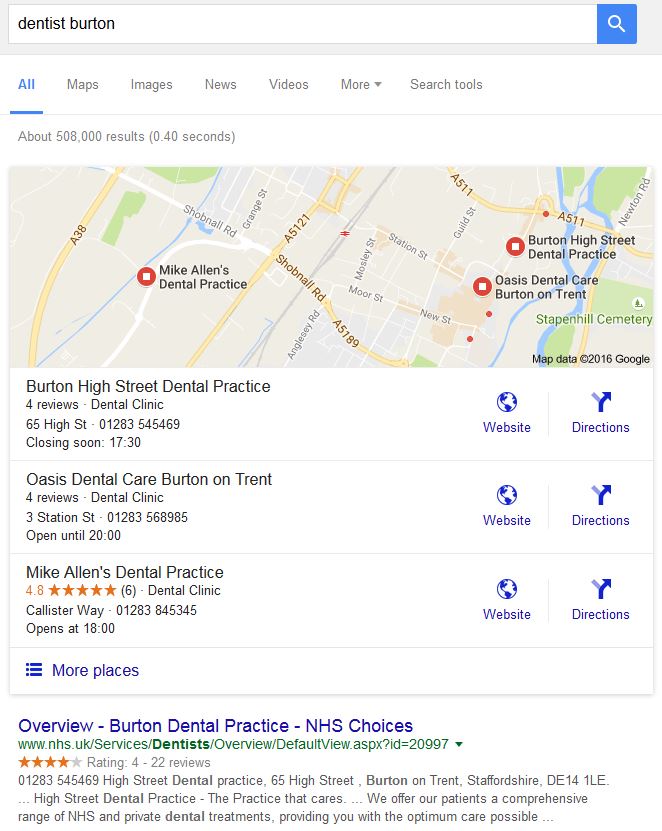
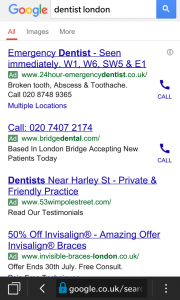 We’ve previously discussed how AdWords, Google’s pay-per-click advertising system, can be beneficial for dentists who have a new website which doesn’t yet have prominent free ranking results and hence very limited traffic.
 The increased level of competition in dentistry has resulted in a proliferation of new dental marketing providers; all vying to grab a piece of the action and your budget too. Along with the raft of new providers, the long-established marketing teams have also introduced numerous ways to try to differentiate their services; some of it useful but unfortunately a lot of it just the same old methodology wrapped up in a new guise and often with a hefty price tag to boot.
 Do you ever wonder why lots of new dental websites all look very similar? Perhaps you recently commissioned a new site but were perturbed to see “Dazzling Whites Smiles” just down the road publish something very similar just a few weeks later? You’re not alone.