Why you don’t need to pay monthly fees for an agency to manage your Google business page

Over the last few months we’ve had a couple of clients approach us to say that they’ve signed up with a third-party agency that approached them and offered to manage their Google Business Profile (formerly Google My Business) for £149 + vat per month. Sadly they signed up to 12 month contracts for this on the back of being promised “wonderful” things in terms of Google rankings and new patient enquiries.

I was instantly suspicious and asked one of the clients to send references describing the service that they signed up to and ‘benefits’ that it offered. Here’s what came back in terms of the supposed benefits:

  • Management and otpimisation of the business’s Google Business Profile page
  • Advice on Google reviews

That was it – no assistance with helping the business to rank better in Google local search, no citation building, no actual assistance with the reviews process. So in reality they’d signed up to a 12 month contract at £149 + vat per where they were receiving effectively nothing on an ongoing basis.

What the agency was actually doing was checking over the existing business profile to make sure simple things like addresses were set up correctly, a few photos added, opening times checked etc and that was it. At best this would represent just an hour or two of work. After this, pretty much nothing else was happening!

Is this a scam?

(more…)

Focus on 6 key elements to ensure your practice website delivers what you expect

If you’re just setting out on the journey to build a new practice website it really does pay to do some homework to ensure that the project delivers to your expectations. A great dental practice website is still the main cornerstone for all of your digital marketing and irrespective of how potential new patients hear about you, they will still check out what you are all about via a visit to your website. If this isn’t up-to-scratch, then the chances are that your new patient will simply look elsewhere.

Unfortunately there is a lot of misinformation in the world of dental website design and it’s very easy to go down the wrong track and end up with a mess. This can range from cheap, generic websites built on DIY platforms like WIX and Squarespace, to hugely expensive sites built by so-called “elite” designers that are technically poor and under-perform in Google. You really do need to take appropriate care at the outset to select the correct designer and platform to give you a website you’ll be proud of and which earns its keep (and more) in new patient bookings.

So what are the key 6 things you need to keep firmly in mind when for your new dentist’s website? Let’s take a closer look.

Aesthetics

It goes without saying that your website needs to look good and be engaging for users. There are lots of dentists upping their game with digital marketing generally and like it or not, you’ll need to compete if you want your share of the new patients using the web to seek out new dental services. Remember that a lot of folk are quite fickle and easily “hooked” by something that looks good – many don’t read past what they see after the first glance and so you need your website to make exactly the right impression very quickly.

Personalisation

(more…)

Getting the basics right with social media advertising campaigns for dentists

We’ve probably all seen the “same old” ads from dentists on our Facebook timelines and Instagram accounts; the ones where agencies use the same cheesy stock images and text regurgitated to lots of different practices. Unfortunately that format no longer cuts it and if it sounds like the content your ad agency is delivering, then it’s time to think again.

With lots of dentists using social media ads to reach their local audiences, now is the time where your ads really need to be different to help you to rise above the noise and secure those all-important new treatment bookings. You need to be the yellow fish swimming in the school of blue.

What types of ads work best for social media advertising?

For the last 3 or 4 years, many dental agencies have been relying on static ads, just a single image, usually from a stock site, with a few words of text across the top. This used to work quite well in the days where using ads on these networks was not that popular; however these days, something much more effective than a simple static ad is required. Let’s take a look at the two main options:

Image carousel – this is the next step on from a static image where 2, 3 or more images can be linked together in a slide-show effect. It is certainly better in terms of engagement rates than a static image and something to try if you don’t have the facilities to create our preferred ad type – the video clip.

Video clips – ads involving snippets of video are by some way the most engaging for potential new users. Facebook (Meta) makes lots of analytical data available with regard to ad campaign performance and it’s easy to see which ads perform most effectively. Because we do a lot of work with social media advertising, our team receives agency mentoring sessions directly with the Facebook team and it is also their firm recommendation to exploit the power of video ads where you can.

Producing good-quality video clips

(more…)

The roles of the practice team and marketing agency

Whilst many agencies still offer “all done for you” social marketing with the promise that no-one at the practice will need to be involved, the truth is that these types of campaigns are nearly always sub-optimal compared to those where the local team is involved.

Today we’ll take a look at why local team involvement always wins out and what you need to consider when preparing your own dental practice for a social media marketing campaign.

Before we begin, here’s a quick example to illustrate why it’s absolutely essential to make sure that preparation is thorough and responsibilities are defined so that new patient enquiries don’t get missed and frustration is avoided.

We are currently running an Invisalign campaign for a large practice where responsibility for monitoring and managing new treatment enquiries had been agreed. In summary, our marketing team looked after the set-up of ads, landing pages and on-line booking systems and the practice was tasked with monitoring the required channels to capture all of the new enquiries. The practice team would then enter all new enquiries into their CRM system for follow-up using their usual procedures.

All was running as expected with enquiries going via the online booking system, but as part of our periodic monitoring, we also checked to see what type of engagement was happening with the ads on Facebook and Instagram. To our surprise (dismay) we found that lots of questions were being asked in the comments but no-one from the practice was responding! This was quickly addressed back to the principal so that staff could be re-aligned accordingly. In the first two weeks alone, we calculated that upwards of eight solid leads may have been lost as a result of this failure to respond. That’s a lot of potential lost revenue and profit and easily enough to cover the running of the campaign for several months.

So what do you need to prepare at the practice to run social media ads successfully?

Assets to make your ads compelling

(more…)

Competition increasing, disposable income decreasing, what happens next?

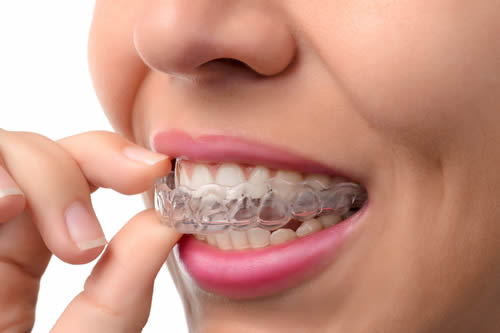
One of the most popular marketing services we offer for UK dentists is advertising for new Invisalign patients using social media i.e. Facebook and Instagram.

We’ve built up a lot of momentum using these techniques and delivered many hundreds of new orthodontics patients, however it’s only reasonable to share some of the slightly less encouraging market dynamics we are seeing currently. We’ll also take a closer look at what you need to do to maintain momentum.

For several years it was relatively straightforward to secure new patients from social media, even for lucrative treatments such as Invisalign. Whilst you need a good eye for developing great ads, high-quality landing pages and a sound knowledge of how Facebook and Instagram work, it isn’t exactly rocket science to do this kind of work – despite what you may hear some suppliers claim. It really isn’t alchemy.

However, over the last year or so, it has become less easy to get new patients like this and more time, effort and budget is needed to deliver on those campaigns. So why is this? Invisalign trade representatives might tell you that all is buoyant and for the aligner business as a whole, that’s easy enough to understand. But what is the impact on the individual provider and what are the underlying factors you now need to consider before embarking on your own Invisalign campaigns?

Competition is increasing

Not only is competition increasing, it’s increasing significantly. To put it in context, we work with one small dental group that recently sent eleven dentists on Invisalign training courses in the space of two months. It seems that virtually every practice we work with now has someone who can carry out Invisalign treatment.

The net effect of this is that lots of dentists can now offer basic Invisalign after attending short courses and it’s quite difficult for a layperson to differentiate between those guys and more experienced practitioners. They are all able to subscribe to a marketing company to publish good looking ads and there is very little a patient would be able to do to be able to make an informed choice regarding who is best qualified to undertake their treatment.

The bottom line is that lots of Invisalign ads from lots of dentists are now appearing on the social media feeds of patient across the UK – in rural settings as well as bigger urban areas. More competition invariably leads to less enquiries, particularly if you don’t up your game to counter it.

Patients have less disposable income

With inflation set to hit 10%, disposable income is being significantly reduced for many. Those who could stretch to more expensive items, including dental treatment, are now more likely to hold off until the future looks a little more certain. This was brought home for me just the other day when, out of curiosity, I was browsing the UK section of the Tesla car forum. To my surprise I saw a couple of posts from owners who were actually ditching “luxuries” such as Netflix and Sky so they could pay for essentials. It’s not a stretch to consider that those folks and many others like them, probably won’t be considering Invisalign in the current climate.

So whether we like it or not and however much your dental coach or trade rep suggests otherwise, times are tougher and the number of enquiries you get for “high-end” treatments will fall away somewhat.

What can you do to mitigate the patient drop off?

(more…)

What you need to do to gain search engine prominence after a new website launch

So you’ve had a new dental practice website built and you’re wondering why your Google positions are no better than your old site? Or perhaps this is your first site and it’s somewhere on page 2 of the search results a month or so after launch? If this is the case, unfortunately it’s what you should expect, albeit a situation that maybe your web designer didn’t explain properly when they quoted for your job?

Let’s take a look at why many dental business owners enter into website projects expecting that the new site will instantly improve their search engine rankings and why unfortunately this often doesn’t happen, at least not to the degree they expect.

Why a new website won’t take you straight to the top of Google

Whilst it’s clear that a website which is built professionally and in compliance with the latest publishing standards should form a great platform on which to progressively build better ranking positions, it certainly does not guarantee a huge leap to the top of Google. Unfortunately lots of web designers are less than transparent about this as they simply want to get the job in the first place.

When it comes to ranking in search engines, there are many factors in play, not just the quality of the website. Of course it is very important to make sure that the new site has great content and is optimised correctly for what is known as “on-site” SEO, but there are numerous external factors, typically grouped together as “off-site” SEO, which also play a huge part. The success of a website is ultimately about how those off-site and on-site factors are optimised and developed.

What you need to do after your new website is published

(more…)

Your web text needs to be unique – here’s why….

One of the key activities for the web team here at Dental Media is updating dentists’ websites, indeed it’s something we do every day in one way or another. This is a separate activity to actually building the websites in the first place, a process where more often than not, we have full control over supplying the content and checking its validity.

When it comes to updating an existing dental website, for example adding a new treatment page; often the dentist or perhaps their practice manager, supplies us with the text to use, along with some images and maybe some example treatment cases too. This is absolutely fine and something we encourage, however it is also an area where problems can often arise. The main issue we encounter is where the text has simply been copied from another website.

We can easily check for this by taking a few extracts of the text and plugging it into a Google search – this very quickly shows up if the text has been used elsewhere.

Copied text is a big “no no” when it comes to publishing on the web and simply must be avoided for the following reasons.

Copyright

This should be obvious but unfortunately dentists sometimes take the view that if they copy another website’s text, they will get away with it. We’ve seen cases where text has been copied from a competitor website in the same location (not too sensible!) to other examples where text has been copied from websites in the USA or Australia. Irrespective of the source, in all cases it was easy to find the copied text – and if we can do it, the person it was copied from can too!

How far you might be pursued if you use someone else’s website text is debatable, but it probably isn’t worth risking it to find out. Aside of the copyright issues, the next issue is also huge and another big reason why you need to write your own unique website content.

Google doesn’t like duplicated content

(more…)

Act now to ensure your dental website data collection and reporting is preserved – GA 4 is here

Knowing how your dental practice website is performing is essential and one of the key tools to help manage this is Google Analytics. We have Analytics installed for all clients where we carry out monthly marketing and we integrate this with other Google tools to provide clear and concise monthly reporting. Transparent, accurate data of this nature is essential for dentists to help them manage marketing budgets and assess how campaigns are running.

However, Google Analytics is changing and the current version known as Universal Analytics will cease to work as of July 1st 2023. Data collected via Universal Analytics will be available for 6 months following. The new version of Analytics ‘GA4’ is actually available now and whilst you might be thinking that July 2023 is a long way away and you have plenty of time to act, you actually need to start moving to the new system now. This is because you need GA4 in place to start collecting data as soon as possible so you have something to analyse – the legacy data from Universal Analytics cannot simply be ported across.

Moving to Google Analytics 4

Having established that you need to move quite quickly to start building website data in the newly formatted system, what do you actually need to do to go about it? For our marketing clients we will handle this as part of the ongoing service; however for dentistry website owners who are independent, this is a short guide about what you need to do.

Set up a new GA4 property in your Analytics account – there is a GA4 set-up assistant which will help you complete this and you also have the option of setting up using your existing tracking code to avoid any website coding changes.

If you don’t already have a Google Analytics account or perhaps have lost access to it, you can always set up a new account and create a new GA4 property there. However in this case you will need to add new tracking code to all pages of your website. We offer this as a stand-alone service to our website clients who want to know how their websites are performing but aren’t part of our monthly marketing and management service.

Integration with Google Ads – if you run Google Ads, you will want to integrate this with the new GA 4 data collection. Please see the Google instructions linked below on how to achieve this. Again we will cover this for our monthly marketing clients and as a stand-alone service for others on request.

https://support.google.com/analytics/answer/10759417

Import/set-up conversion tracking – if you have conversion tracking set up (you should) then you can import existing conversions from Universal Analytics into GA4. You can do this in the Tools > Settings > Conversions section of the admin console.

(more…)

6 key things to look out for to avoid WordPress maintenance and usability headaches

WordPress is an extremely popular system for building websites, including those for dental practices; indeed it is the most popular system in use worldwide.

WordPress has some huge positives but also some significant negatives too – however with a little planning and diligent ongoing maintenance, many of the problems can be avoided and you can benefit from an excellent website for your business. Here at Dental Media we use WordPress to build lots of dental websites and we thought it would be useful to share our experience with you.

Here are some of the main issues to look out for if you choose this system:

Understand the technical and maintenance requirements

WordPress is great but you need to set it up correctly and then stay well on top of it when it comes to maintenance.

WordPress can be quite resource intensive and so will drag down a cheap, overcrowded server. This  results in slow page loading, frustrated users and damage to your SEO. So with WordPress you will need some good quality website hosting and a skilled designer to set the system up optimally. When the site is live, you will then need to have it maintained regularly to a) keep it secure and b) include new functionality as the core program updates (this can be quite frequent).

If you fail to maintain a WordPress website, it is very likely that at some point you will get hacked as vulnerabilities in the system are exposed by the hacking fraternity. Normally any problems can be avoided, but maintenance should be done diligently and in a timely fashion.

Don’t go overboard with functionality

All too often we see designers load a website with lots of bells and whistles in pursuit of an aesthetic masterpiece. However, they fail to balance form with function and the resulting website can be very clunky and deliver a poor user experience. This inevitably leads to poor conversion rates and can also limit Google ranking potential. You may have seen dentists’ websites which are chock full of glamorous stock images and funky menu systems etc which are quite popular these days? However, if you check closely where they rank in Google and how they perform technically, you’ll find plenty of problems.

WordPress works with a system of “plugins” which allow you to add all sorts of functionality, but overdoing it will result in a sub-optimal website for a variety of reasons. Similarly if you go overboard with lots of fancy, generic stock images and funky page effects, you can also drag down site performance very quickly. A great website will always balance form with function.

Select the minimum number of well-supported plugins

(more…)

What is SEO dilution and why do you need to avoid it?

We are about to start an SEO project for a dentist who moved to our services having paid nearly a thousand pounds per month to an agency which failed to deliver. His website traffic did not improve and the reporting he was provided with did not show critical metrics such as website traffic or conversions (enquiries) – so the dentist had no real visibility of what was happening until he’d paid out around £11k; for very little.

What went wrong?

In the first instance, it should be said that the dentist was taken in by promises of quick success. He was also lured by the reputation of the dental marketing agency which on face value looked great – however, if he’d looked deeper and checked their actual performance in detail, he may well have seen that all was not quite what it seemed.

With SEO, it is essential to complete an in-depth baseline audit to understand a range of issues, including the current performance of the website, the competitive climate and also the client’s expectations. A strategy can then be developed to address the various issues and create realistic goals. Achievable SEO objectives must be defined and they must be in-line with what Google will actually allow – this clearly hadn’t been taken into account by the former SEO agency that’d developed a “strategy” which was never going to work well.

This brings me on to the topic of what I call ‘SEO Dilution’.

So what exactly is SEO dilution?

(more…)