The good, the bad and the plain ugly….

Ensure your dental treatment pages offer a great user experienceA key component of a great dental website is the treatments section. Here you can showcase your services, promote any headline treatments and really show how you can make a difference for a prospective new patient. Consequently it’s important to put as much effort into this section of your website as any other.

Often we see websites where there is a “flashy” home page, a decent team page but then as you progress, it all get a little bit bland.

So what are the key considerations when planning the treatment pages for your new site?

(more…)

How voice search will affect SEO

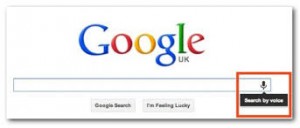
Using speech to search GoogleBefore we start, don’t panic! The introduction of voice search by Google doesn’t mean that everything on your dental website needs to be restructured immediately.

However, I will use this as another illustration of how fast the “world of search” changes and how we as professional search marketers need to stay abreast and modify our marketing campaigns accordingly.

What is Google voice search?

(more…)

Another useful technique for improving website SEO

It's descriptive text for an image of course!In another of our back-to-basics website SEO articles we will take a quick look at optimising images and how this can make a small but useful improvement to your ranking position in the search engines.

Whenever an image is embedded in a web pages, attributes can be added in the website code to convey additional information – namely the alt text and image title.

We will also take a quick look at image file names and whether they also help our SEO.

(more…)

Making it easy for Google to find you website pages

In the Dental Media blog you will find a wide range of topics, from holistic overviews of various web marketing techniques through to detailed descriptions of some of the important component parts. Today we will drill right down into one of the key tools which should be installed as standard on a website but is still all too often neglected…. the humble sitemap.

Before we look at what a sitemap is and how it is beneficial, let’s step back a little and recap on how Google finds your website pages and then ranks them in its search index………

(more…)

Why a new website needs to be tested in multiple browsers

Firstly, what’s a browser?

More accurately, a ‘web browser’ is a tool or piece of software that resides on a PC, tablet or mobile ‘phone which is used for viewing content published on the Internet. A browser interacts with the web server (which hosts website files) to interpret website code and render this in a format that is readable. Fairly straightforward stuff that is understood by the majority.

However what is slightly less well understood is that there are dozens of browsers; some with large market share, others with less, but still important in their own right. If you ask a regular web user, they may be able to tell you about 3 or 4 of the main Internet browsers, possibly Internet Explorer, Firefox, Chrome and maybe Safari.

But what is less well known is that there are several more and all with different versions for different operating systems. Some users with older devices and those who maybe don’t upgrade often, could also be using a browser version from a couple of years back.

So why is all of this important?

(more…)

 ….and how they relate to SEO

Over the last few weeks we’ve turned down several potential new SEO clients. Whilst turning clients away is not a regular feature of our business, there are some occasions where, ethically, if you feel you can’t add value, then you need to politely walk away. Now given that we have a very good reputation for search optimisation and it’s a core part of our business, why did we elect to decline these particular opportunities?

(more…)

Tools to measure and analyse website traffic

Any professional online marketing project relies on analytical tools to help measure effectiveness. The output of these tools can then be used to tune the inputs to the overall process to optimise and enhance. Marketing processes need to be targeted, ROI based and carefully evaluated – if not you will be wasting some, if not most of your cash.

The hub of any online marketing process is the website. It is particularly important to measure and analyse traffic to the site i.e. the quantity, quality, sources and ultimately, if it resulted in new business, or in web parlance, conversion.

Even if you employ a marketing company to look after all of this, you should have access to suitable tools to ensure that you, the website owner, have a good overview of how the marketing is working. Don’t simply rely on a monthly report from your marketer as these can be easily configured to show you only the data that the marketer wants you to see i.e. just the good bits.

Having access to your own analytics systems means that you can, with relatively little experience, keep a high level eye on things. At Dental Media we encourage all of our clients to use the same tools that we use, for example Google Analytics and Webmaster Tools.

So what free tools are available to webmasters to monitor site performance?

(more…)

An updated study on ranking signals – June 2013

Visibilty in Search EnginesAs seasoned search marketers in the dental arena, one of our main tasks is to try to identify what works and what doesn’t when it comes to increasing a website’s visibility in the search engines.

This is particularly important given that the Google, in particular, is making more changes to its ranking algorithm than ever seen before. For reference, the “algorithm” is the system used to calculate where a website is placed in what the industry calls ‘SERPS’ – the search engine results pages.

Over in the US, a company called SearchMetrics monitors hundreds of thousands of websites in an ongoing study designed to determine which factors affect the position of a website in SERPS, particularly for the all-important Google search engine. Their infographic below presents the data and below this I will attempt to summarise. Please note that this is not definitive – no-one other than the guys at Google HQ, really knows the inner-workings  of search, so we can only advise what we see and present data from what is essentially empirical testing.

(more…)

New data shows the importance of a prominent search engine position

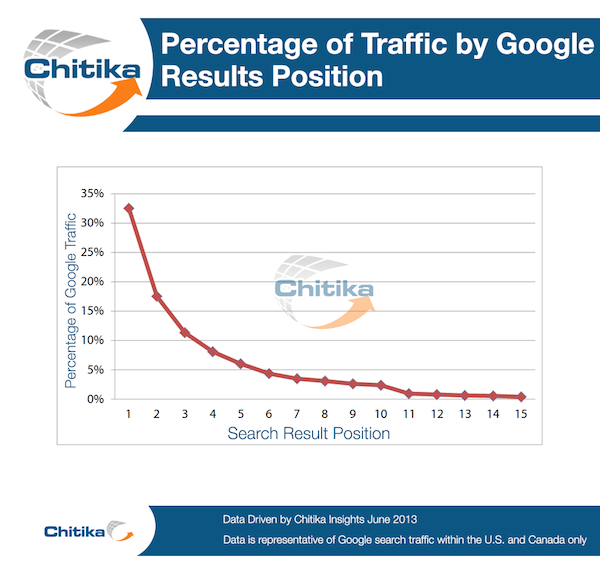
The correlation between a good ranking position and high levels of traffic to your website is already reasonably clear and the benefits understood. However, latest data from Chitika, a prominent online ad. network with access to huge amounts of search information, suggests that the top position is now receiving approximately 1/3 of all clicks. Position 2 receives 18% with third taking around 12%. The fall-off in traffic continues right through to the bottom of page one which receives around 2.5% of the available clicks. So quite a range.

The following graphic courtesy of Chitika shows the overall picture in more detail:

How traffic varies with Google position

Note that the data is US specific but similar studies in the UK suggest a near identical spread of results. Perhaps even more important is that Google commands 90% of all searches in the UK whereas it’s nearer 70% in the US – hence the data is even more relevant for UK businesses.

(more…)

The ‘MailChimp’ system for dental practices

MailChimp for dental practice marketingI’m busy configuring email marketing systems for some of our dental clients so I thought I’d take 30 minutes out to tell you about the system we use i.e. MailChimp.

However, before I delve in, here’s a quick recap about the benefits of building and nurturing an email list for direct mail marketing:

The benefits of email marketing (or ‘e-newsletters’)

(more…)