Which sections of a dental website should you prioritise?
How the structure of your site affects user experience and SEO.
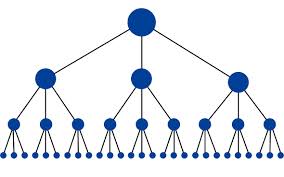 A key element of the dental website design and planning process is the configuration of the navigation structure and hierarchy of the information pages within the overall framework. This is essential for two main reasons, the user experience and SEO, both of which need to be considered very carefully.
It is generally considered that larger websites work better for SEO – this is because Google puts great emphasis on good quality content which has sufficient depth and value to be considered worthy of ranking above similar but less well structured material.
Of course, off-site factors such as the links which point back to your pages, also play a significant part in search ranking, but the initial foundations must be built with a focus on good quality content and how it is structured within the dental website.
Search position is not the only factor – if we consider user experience, content which is configured well and linked together within an intuitive navigation structure, will certainly help to keep a user on your website and help guide them through to your contact form.
So we can see that the structure of your website and the quality and depth of the content therein, play very important roles both for ease of use and for your ranking position.
The pyramid effect and page rank – how does this affect SEO?
 When planning a new site, it us useful to think of the structure in terms of a pyramid. At the top are the headline pages and below this the supporting pages deeper within the site. This is reflected through to the navigation structure. Google uses a technique called “page rank” (alongside other factors) to determine where a site is positioned in the search results.
“Page rank” flows from page to page via links and accrues to differing degrees for all web pages – whilst not always the case, pages with higher page rank tend to fare better in search results than those with lower page rank. Consequently it is desirable to try to accrue good page rank on the pages of your website which you wish to rank well.
This is where the “pyramidal” structure of a site comes into the planning equation – consider as an example a top level “teeth straightening” page which incorporates general orthodontic information and perhaps short paragraphs about some of the techniques which are available. Beneath this in the navigation structure you would include an unique page about each of the treatments available at the practice – for example 6MS, Cfast, Damon, Inman etc as appropriate. Whilst each of these pages may well rank in Google in their own right, it is sensible to link them all through to the top level “straightening” page in order to flow page rank upwards.
The objective here is to gain good rankings for all pages but primarily the top level page which incorporates the more generic phrases, “braces”, “teeth straightening” etc which the general public are likely to search for.
In turn, back-links can be sought pointing to all of the pages but with an emphasis on the headline page – these links from 3rd party sites will also flow important page-rank (good quality, relevant links only please!)
Website planning considerations
The concepts above are not the only factors which affect how a site ranks – indeed there are many more. However, when planning a new website we should keep this hierarchical structure in mind and how page rank flows throughout a website.
So look closely at the key treatments you wish to promote, incorporate these at the top level within the site navigation and then support these pages with relevant sub-pages. This is where a blog is also very useful as specific blog articles can be used to link back to the higher level pages within the main website.
Summary
Whilst this is quite a simplistic overview of website structuring, the principles are sound. Website configuration is important not just to ensure that a user can navigate with ease but also to ensure a great platform for SEO. If you would like a no-obligation review of your website and recommendations for improvement, please contact the Dental Media team on 01332 672548.