
Which components make up the Google search results?

Google’s search index is multifaceted – here’s a quick overview
 With more and more dental practices developing an online presence and beginning to realise the importance of “Google”, I thought it opportune to compile a quick review of the main components which make up Google’s search index and how they all piece together.
Perhaps unsurprisingly, many don’t actually know that the index (or SERPS) is made up of various different types of results; unpaid, paid, maps, local and more. So let’s take a closer look….
The unpaid or ‘organic’ results
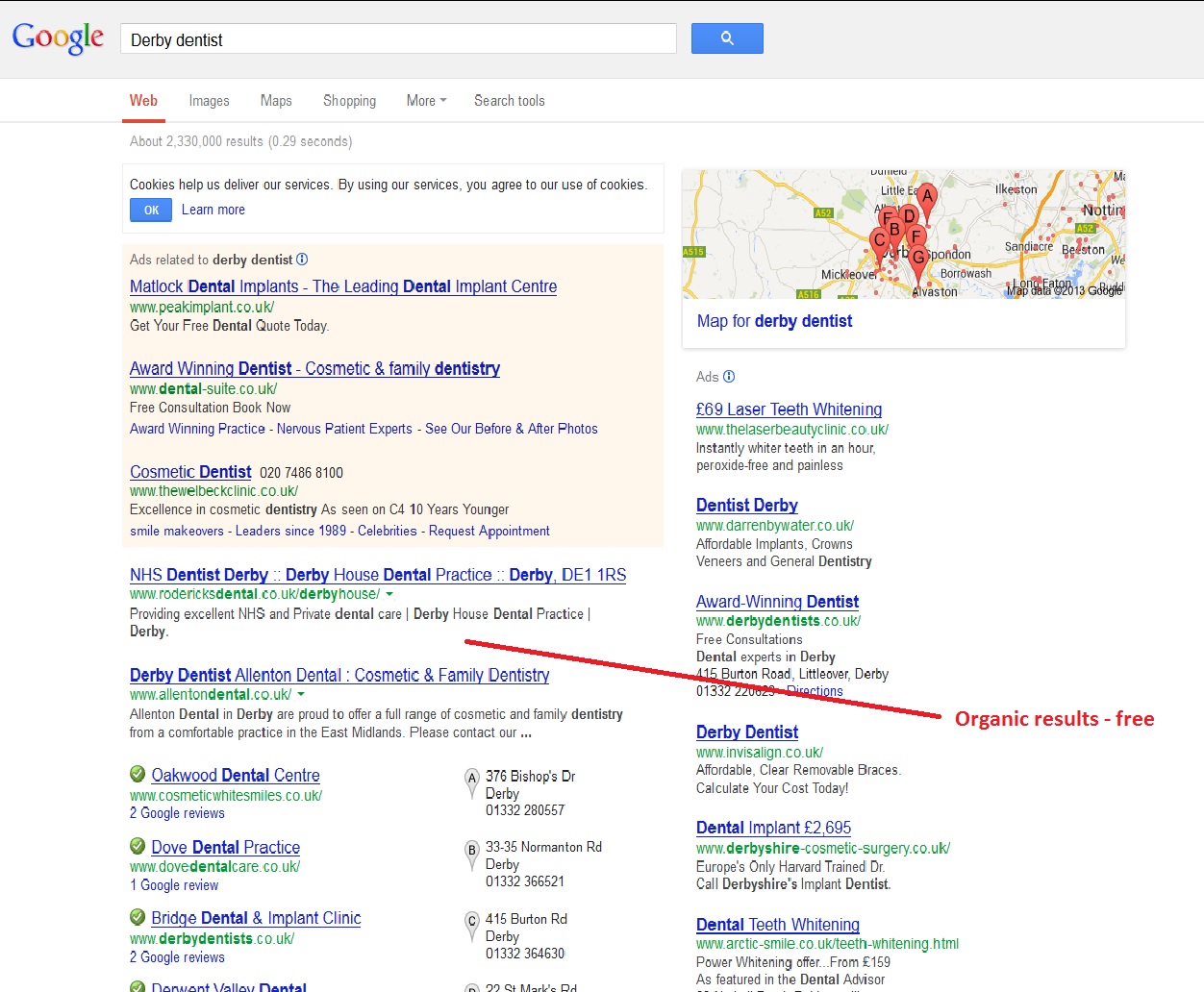
This is basically where Google started, i.e. before the advent of paid advertising etc. The organic results are those which appear in the main body of the results page, excluding the ‘local’ results which also appear on page one. A good listing in the organic results is the key target for all businesses – they are free and, as long as you do some work to maintain the quality of your site, also sustainable. The organic results also tend to attract better click-through rates in that users understand and hence trust them more than any of the other result formats.
Local results
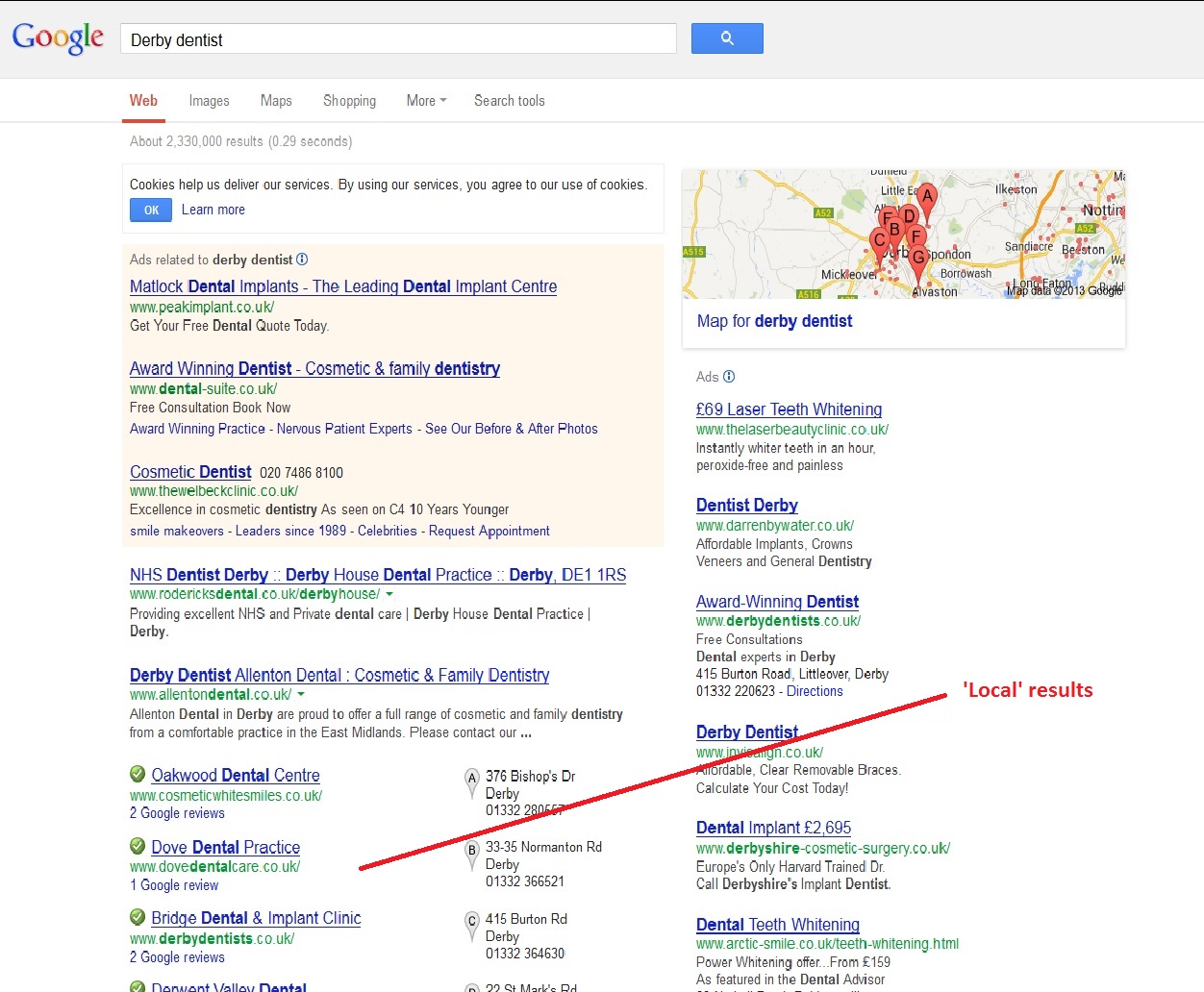
Google introduced “local” results several years ago and the format has been tweaked fairly consistently ever since. Typically you will see seven results sandwiched in amongst the organic results on page one – this is known as the “7 pack”. These local results are just that i.e. Google using location detection technology to locate a searcher’s whereabouts and then presenting them with results from businesses local to them. Just like the traditional organic results, there are search optimisation techniques that can be used to help a business show in the 7 pack, for example encouraging client reviews and seeking listings in good quality, on-line business directories. There are also instances where Google will display a ‘3 pack’ and ’10 pack’ of local results.
Map results
Mingled with the local results, you will also find ‘map’ results – this is where Google shows additional information about a business including its location etc. This, and the main local result, are typically associated with what Google calls its Google+ local properties for businesses, all of which can be optimised to bring the best chance of a prominent ranking.
Paid advertising – Pay-Per-Click
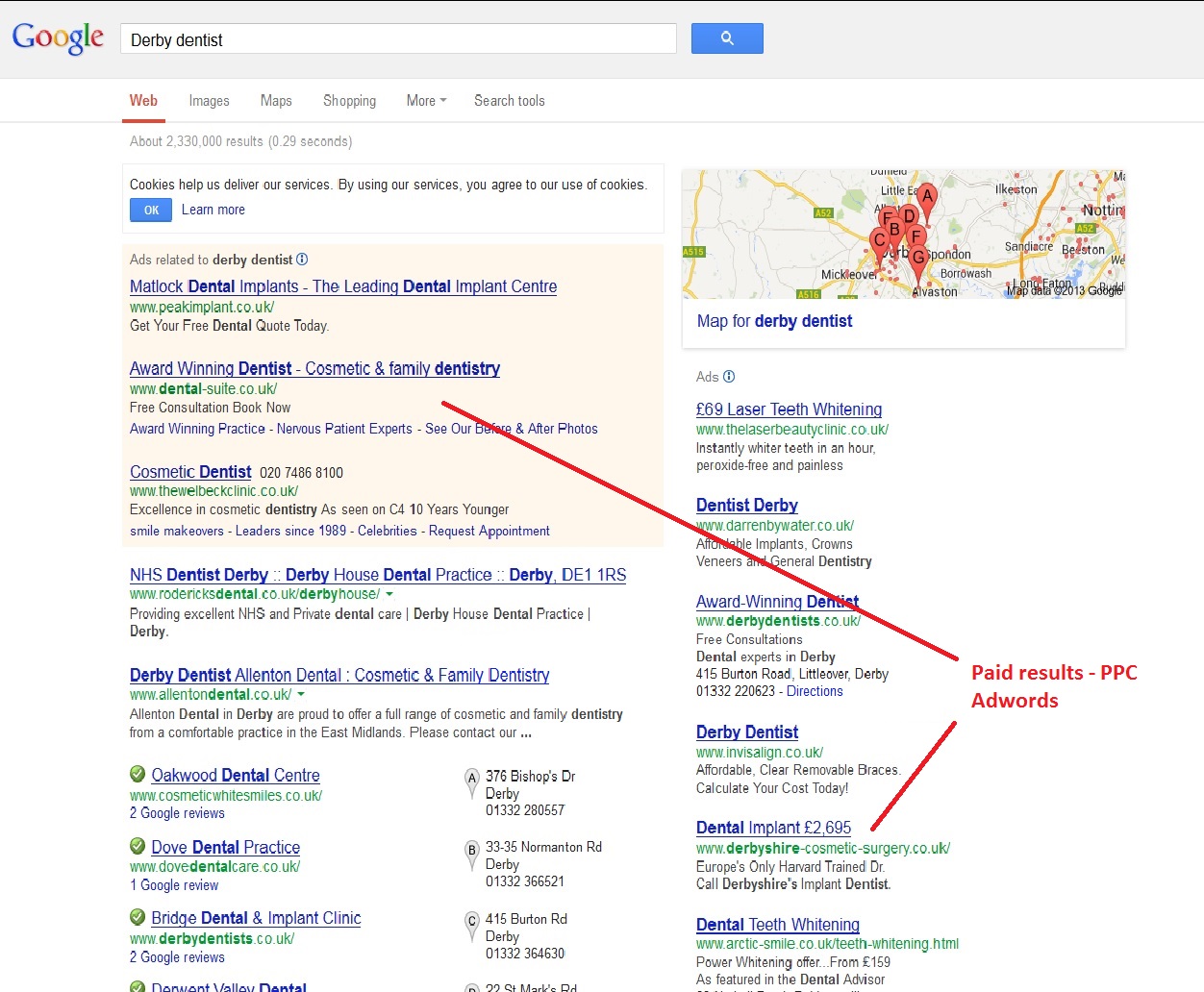
Google also offers the opportunity to promote your listing using their Adwords system. This is a bidding system whereby, in simple terms, the more you pay compared to your competitors, the higher your advert appears. However, it’s not quite as simple as a straightforward bidding game – skilled Adwords practitioners can optimise campaigns to keep costs down whilst still achieving high positions and good click-through rates. In fact the whole PPC arena can be extremely costly so we always advise seeking expert advice when setting up.
Personalised search
This is the area that very few people actually understand or realise is happening. For some time now, Google has been presenting personalised search data to users depending on various factors, not just their location but also what they previously searched. This is why two people searching for the same thing can see markedly different results. You can opt out of this and see “clean” results but you have to know how to set your PC browser to achieve this. Sneaky stuff!
Other search results
If you take a look near the top of the Google page, you will see options to change the type of search that you are making, for example, you can search for current news items, videos, images, shopping results and more.
Summary
The Google search results page is multifaceted although the majority don’t actually realise it. Our short guide above details the main features you will see when you make a search and hopefully enable you to differentiate between the component parts. If you would like to know more about how to make your dental practice show up well in Google, please call the Dental Media SEO team on 01332 672548 for no-obligation advice.