
Website domain authority

What is domain authority and why is it important?
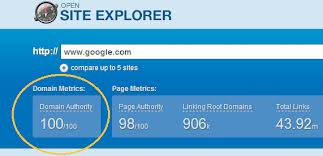 You may have read SEO articles which mention “domain authority” as being a key website ranking factor and wanted to know a little more? So what is it exactly?
Firstly it’s important to establish that domain authority is not an official Google metric; in fact it was established by “MOZ”, perhaps the largest and most highly respected authority on search engines outside of Google itself. They explain it as being a consolidated prediction of how well a website will rank in Google using a suite of metrics such as number of linking root domains, total number of back-links, trust signals, social media factors etc.
In fact they measure 40 separate factors and use machine learning to correlate these against Google’s algorithm in an attempt to model how search engine results are actually generated. So there is some heavy-duty number crunching behind this.
My own take on this is that the “domain authority” calculation is likely some way off when compared to what Google actually does, in fact there are lots of examples that prove this. However, it is also fair to say that the consolidated DA figure which pops out of MOZ’s calculator provides an excellent way of comparing different websites and then tracking how they fare in Google over time. Using this tool you can get a very good idea of the “strength” of your website and also that of your competitors.
How can I improve domain authority for my own website?
In simple terms, the higher the domain authority the better. As mentioned earlier, there are exceptions to this but typically, sites with a higher ‘DA’ rank better than those with a lower score.
There are a number of factors which contribute, so you need a fairly broad program of optimisation techniques to steadily increase your score and move ahead of your competitors. Here are some of the main ones:
Good quality links
The power of back-links to your website is not going to fade any time soon; indeed Google have recently reinforced this. Consequently it is still a top SEO priority to seek out good quality, relevant back-links to your website. As I’ve noted numerous times before in this blog, you *must* make sure your back-link profile is good else risk the devastating blow of a Google penalty. Just keep in mind that cheap link-building is invariably bad link-building, particularly since Google changed its quality criteria.
Activity on social networks
Social media can influence search ranking and all indicators suggest this will continue to increase over time. Building a community using social channels is no longer just about engagement but will also generate the ranking signals which Google is now aggregating. This is particularly useful if you have other authoritative commentators within your networks. If you aren’t active on social media yet and are serious about prominent search rankings, then now is the time to get moving.
Broadcast high quality content
This is important to help build your web footprint, for attracting links and for helping to populate your social media channels. This “content marketing” may sound like an onerous task but it’s relatively easy to get moving via a blog linked directly to your website. We can also help you with a suite of tools which will help to make this process as streamlined and time-effective as possible.
Summary
 Understanding “domain authority” (DA) or just simply the “strength” of your website and what contributes to it, is important in the broader context of search engine optimisation and web marketing.
Building the authority of your website sustainably over time will certainly improve your Google positions. Need help? Call Dental Media on 01332 672548 for free dental web marketing advice. We will be pleased to discuss your own website, check it’s current status and make recommendations for improvement.