
The anatomy of a web design project

How we manage new website projects at Dental Media
One of our core values at Dental Media is offering completely flexible web projects for our clients i.e. a fully bespoke approach. We find that most of our clients appreciate this because they do not wish to be pressed into design packages that don’t fully meet their requirements or budgets.
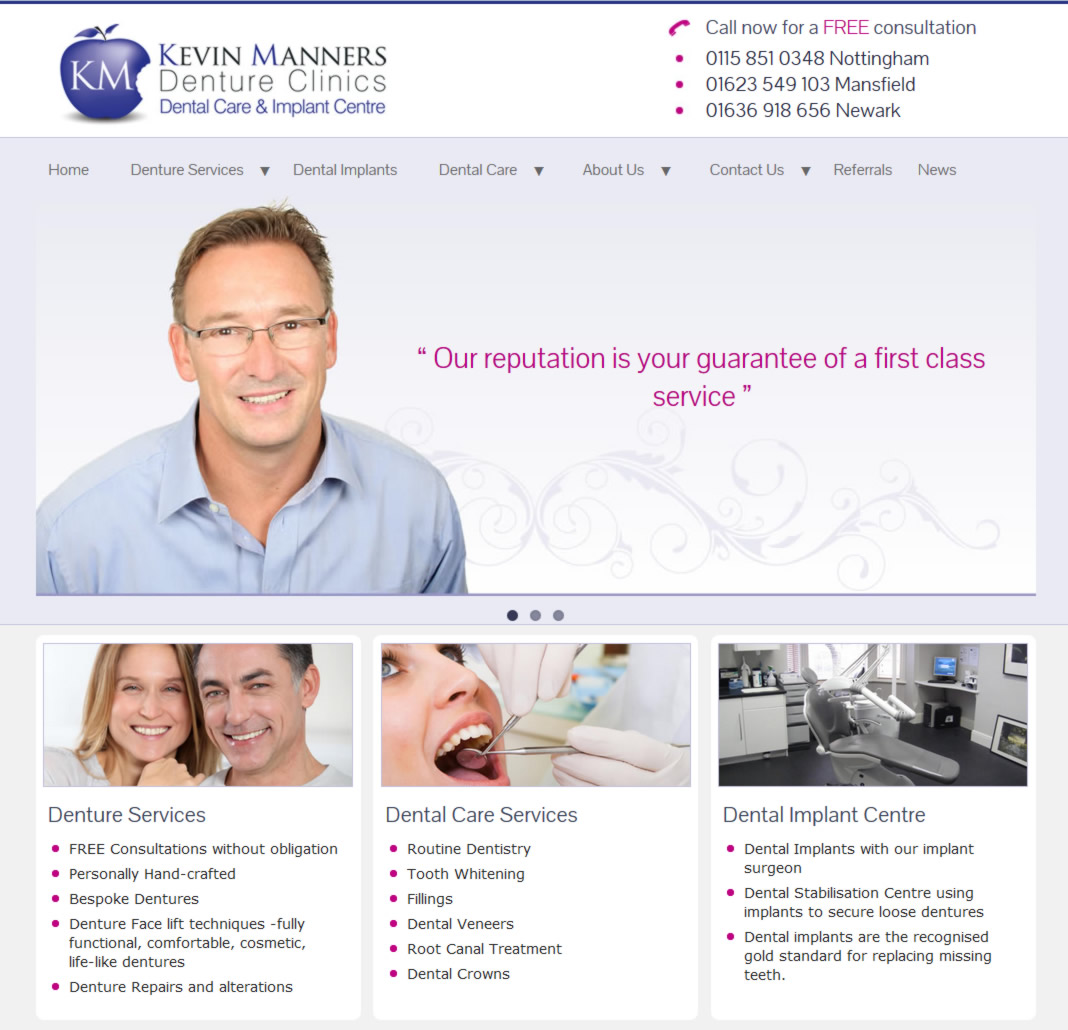

A bespoke design process means that you can select exactly how many pages you need for your website, the type of content management system, design for mobile etc. without feeling that you need to purchase a “Gold” or “Exclusive” package or similar to access the latest features. So whilst we are always there to guide and do the “leg work”, you are always in control of your project.
An overview of our design process:
Contact – typically a dentist or practice manager gets in touch either after a word-of-mouth recommendation or after finding us by other means, e.g. a web search. Out of interest, we are fortunate enough to have over 60% of our enquiries come via word-of-mouth referral. Quite often, the enquirer has no real idea of how to proceed; for many, it’s their first website, an upgrade from a ‘DIY’ attempt or request to transfer in from another dental marketing company. So it’s very important to invest time at this stage to understand exactly what the client needs – this often involves an initial, informal telephone interview to establish the draft scope of the project.
Quotation – based on findings from our initial discussions with the client, we will provide a quotation. This will cover the latest website options and supporting services that they may wish to consider e.g. video, photography, ongoing marketing etc. At no point do we try to sandwich the client into a set of pre-configured services – our objective is to establish the best offer commensurate with the budget they have available.
At this stage we will also research the competitive environment in which the client operates i.e. where their dental practice is located and how well competing dentists are represented in their area. This will look at elements like Google search presence, social media activity etc. and helps us to advise the client about the budget they may need for ongoing web marketing support. This element is often neglected by web companies who just want the cash for building a website – however, it’s professional and appropriate to discuss the importance of Google ranking and “page one” results. Sometimes a new website will be sufficient on its own but in competitive areas, ongoing web marketing support may be needed.
The design questionnaire – our design questionnaire is quite comprehensive and covers various aspects, from the simple, such as preferred colour schemes, through to more complex factors like determining the ethos and target demographic of the practice. Once the questionnaire is complete, we will make a follow-up call to clarify any issues.
The draft design – using the information from the design questionnaire (and typically lots of notes from telephone conversations and emails) we proceed to create a draft design and navigation structure for the website.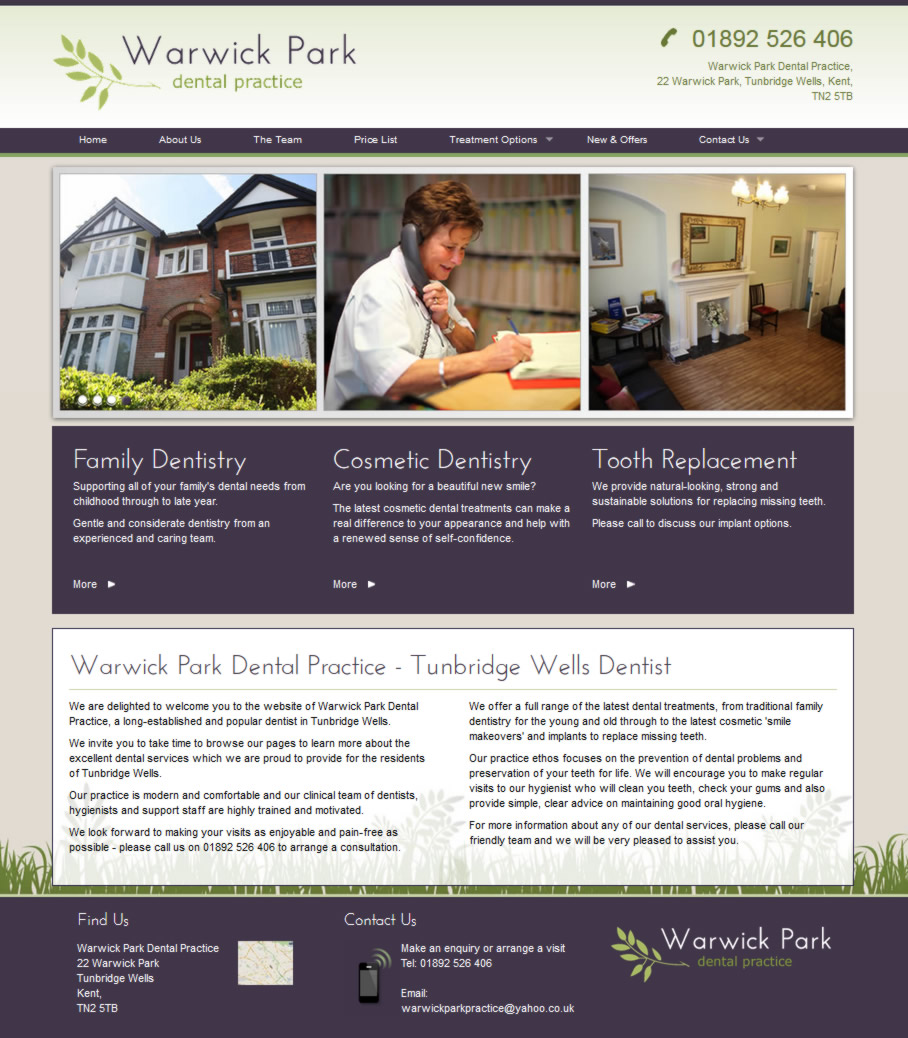
This is published to our test servers so that the client can see it but not the general public. This is the start of an iterative process whereby the client feeds back until the design is approved.
As designers and and marketers, we are always diplomatic but we will advise clients accordingly where we feel they are heading down the wrong track. This might be where they may have an idea that appeals to them but from experience, we know won’t meet the needs of their users.
Coding – following approval of the design, we move onto the coding process. This basically turns the graphical design and layout into a working dental website. We will check that the design conforms to all of the latest web coding standards, works properly in new and old web browsers and also how it performs on desk-top, tablet and mobile devices – a very thorough testing process. We will certificate the design for these tests.
Content addition and optimisation for search (SEO) – this is an extremely important element of the overall design. Our content writers are very experienced in dental copy writing and will ensure that each page of content is unique and reads well. We will discuss with you the style of text that you want – for example, some dental specialists who are accepting referrals need more detailed and comprehensive text; GDPs typically need a more conversational style which will be more attractive to the general public.
We will also carry out thorough on-site SEO during this phase, for example correct configuration of page titles, meta descriptions, data hierarchy etc. We will also ensure that your main keywords e.g. treatments and locations, are used subtly and in compliance with Google best practices.
Other finishing touches would be to integrate the site blog and link through to the usual social media accounts, for example Twitter, Facebook and Google+.
Finally we will install Google Analytics, an xml site-map and prepare to establish the site in Google Webmaster Tools – all of these factors are important for SEO.
Checking, sign-off and publishing – following final checks by our team and by the client, we will launch the website onto the Internet. This is typically using our own business class hosting service but we can use the client’s own hosting if it supports the new website correctly and robustly. If the project was a website upgrade, we will also ensure that the best methods are used to capture any Google relevance from the old site as well as ensuring any old links re-direct through to the new pages correctly.
Post launch follow-up – during the first few weeks after launch we will monitor the site in Google and make “tweaks” to the page structure to ensure that it is correctly optimised.
Ongoing web marketing – where we are undertaking the ongoing search optimisation for the client, we will commence the SEO project directly after the website is launched. This will typically include blogging, link acquisition and social media management. We will also check to make sure that the site is not being compromised by any historical factors, e.g. a Google penalty from historical link building. If this is the case, we will propose a “clean-up” strategy to get the domain back on track.
Ongoing site management – we offer two services for site management, pay-as-you-go and monthly contract. A large proportion of our clients work with PAYG as it is most suitable for their needs and they only pay when they actually need services. However, some of our clients with large websites and more complex requirements do work within our monthly support contracts. As with all of our services, flexibility is the key factor – we will not upsell expensive monthly contracts where we believe PAYG will suffice.
Summary
During the last twelve years of designing websites for dentists, we have developed and refined a project process that works very effectively and delivers an extremely positive outcome for our clients. If you would like to know more, why not call us for a no-obligation chat on 01332 672548 to discuss how we can help.