
Dental Marketing – The 2014 Tool-Kit

Successful dental marketers will use these tools in 2014
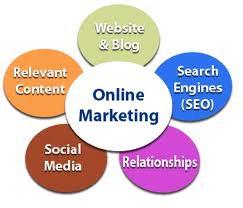 With 2014 just around the corner and more dentists realising that the web is a primary source of new patient enquiries, it’s timely to conduct a quick review of the main dental marketing tools to bring into action for the new year ahead.
We’ll take you on a quick tour of the main methods to help promote your website and gain new patients from the web.
The dental website
Central to all of your web marketing efforts is your website. As we’ve discussed previously, marketing in the dental sector is quite progressive which has pushed the standard of practice websites to new highs. Whilst there are still lots of very poor dental sites out there, there are also lots of high quality ones too. Consequently your own site needs to present a user-friendly, personalised and professional overview of your services on-line. This is not an area to skimp on – we recommend avoiding low-spec “out-of-the-box” DIY dental website builders and instead use a professional service. However, there’s also no need to pay over-inflated fees – great sites are available from around £1.5k so it makes sense to shop around.
It’s also important to realise that “function” is equally important to “form” when it comes to your website. Avoid huge background images and other gimmicks which will slow your page speed to a crawl – this is bad for user experience and it will also compromise performance in Google too.
Go mobile
Failure to implement a mobile optimised website means failure to reach > 30% of all of your website’s visitors. Please don’t think that a minimsed version of your desk-top site will be sufficient on a mobile device – you might (just) get away with it on a tablet but it’s not going to work on a mobile ‘phone. Bounce rates (users who leave your site immediately) are much higher for standard websites viewed on mobile which simply means you are pushing your visitors away to your competitors.
Any new website should be developed in a “responsive” format which has outmoded separate mobile versions – more about the advantages of responsive design here.
The dental blog
 A well-designed blog, set up on your main website domain and complementary to your website, is an essential tool to add the new content that Google loves and also encourages your visitors to check back for useful updates.
Additionally your blog is ideal for generating social media content and seeding long-tail keywords to assist SEO. Avoid using free blogging services such as “Blogger” and “WordPress.com” as these will not generate the same benefits as a blog which is fully integrated with your website.
Social media channels
Still disliked by many but very important, social media is becoming a cornerstone of successful marketing campaigns, not just for the obvious engagement potential but also to support search engine optimisation. You can read more about the role of social within SEO here.
As a minimum you should provide resource to manage Twitter, Facebook and Google+ and, if time allows, complementary channels such as Instagram and Pinterest. However, it’s better to manage a few channels well than to spread too thinly.
Claim your free Google properties and optimise them
It’s surprising just how many dentists fail to claim their Google+ local entry and optimise an associated Google+ business page. These properties offer lots of advantages, particularly for local search ranking and should be exploited. More here.
Video and YouTube
 Over the last three years, video has proved itself to be one of the best tools for attracting new patient enquiries. However, with Google now measuring how long users “dwell” on a web page and using this as an indication of quality for ranking purposes, the holding power of video on a dental website has yielded a new and important benefit.
Websites with a simple suite of videos, including patient testimonials, are in good shape for improved user engagement and better Google positions.
Email marketing
Another winning tool but significantly under-utilised, carefully crafted email marketing is a simple way to stay in touch with existing patients extremely cost-effectively. Using tools like “MailChimp” and a re-usable html email template, a practice can broadcast news and the latest offers very efficiently. Modern systems are extremely flexible and facilitate targeted marketing – so for example, a referral practice can mail out to their referral partners independently from the general public.
Content marketing
Will users want to engage with you if you simply publish news about yourself and links to your own website? Or would they prefer a mix of information containing useful 3rd party information alongside your own material? The latter method is far better – this method of gathering and publishing useful information to promote engagement with your user base is known as content marketing.
This doesn’t need to be on massive scale and it’s simple enough to get moving without too much time commitment. Please check out our blog articles to help you get started and to see what tools are available to make the process efficient.
Search engine optimisation – SEO
It’s been a tough year for SEO with Google eliminating all of the quick wins so dear to some marketing agencies who used to make a killing by outsourcing to cheap off-shore suppliers. However, SEO is far from dead and skilled practitioners are still able to improve website ranking using ethical means. But it’s not cheap and takes time – “page one rankings for £200 in two months” is history so you need to budget accordingly.
Pay per click – AdWords
PPC has an important role to play alongside a good SEO strategy. It is particularly useful for new dental websites which are still gaining traction in organic search, for sites in particularly competitive areas and also mature sites which already have good rankings and wish to “close out” the top end of Google by gaining incremental traffic with paid ads.
Just remember that PPC is not a trivial exercise and to avoid lots of wasted budget, needs to be handled by experienced AdWords managers.
Summary
With the New Year approaching, it’s a sensible time for dentists to re-evaluate their internet marketing plans. The tools discussed above are the main elements to consider and a thorough web marketing plan will utilise all of them, at least in some part. On the face of it, it can appear bewildering and difficult to know where to start, but it need not be if you select an experienced marketing partner to guide you.
Setting up the infrastructure can be done for less than £5k and the ongoing investment, anything between 2 – 5% of annual turnover depending on the practice location and strength of the competition. Returns from well-managed campaigns are excellent. If you would like to discuss in more detail and see examples of how the marketing team at Dental Media can help your practice, please call us on 01332 672548.